Open 24 hours, 7 days a week

Exterior painting · while access is up

Sandhurst’s TrustedExterior Painting Specialists

Exterior painting and making good, carried out with the same care as the roof itself and at the moment the scaffold or access equipment is already on site. Surfaces prepared properly, weather-exposed timber protected, and the whole elevation finished rather than half-done.

Carried out with roofing access · free quotation · 100% satisfaction guarantee

  • Access equipment already on site with roof works
  • Surfaces prepared, not just over-painted
  • Fully insured working-at-height teams
  • Photographed before and after
  • 100% satisfaction guarantee

The service

Why Exterior Painting Belongs With Roof Work

The most expensive part of painting the top of a house is not the paint, it is getting safely to it. When scaffold or access equipment is already up for roof, chimney or roofline works, the marginal cost of preparing and painting the high elevations, bargeboards, render, soffits and rainwater goods drops sharply. Doing it later means paying for access twice.

We treat painting as protection rather than decoration. Exposed timber that is left unpainted absorbs water, swells, splits and eventually rots, and the timber at the top of a house is exactly the material most exposed to driving rain from the south-west. Sound paint is the barrier that keeps that from starting.

The work includes making good: filling, sanding, treating and repairing the surfaces before anything is applied. Paint over a poorly prepared or already-damp surface fails within a season or two, and painting over rot hides a problem that will be more expensive when it finally surfaces.

Where it applies

  • Bargeboards, fascias, soffits and eaves timber on properties keeping their existing timber roofline
  • Rendered elevations, gable ends and pebbledash needing recoating
  • Timber windows, doors, porches and outbuildings on the same elevation
  • Cast iron rainwater goods on period properties
  • Any high-level surface that is being reached anyway during roofing works
Book a free site visit

If it is left

What Failing Paintwork Lets In

Paint is a waterproof skin. Once it cracks, flakes or blisters, water gets behind it and stays there, because the remaining paint stops it drying out. That is why partially failed paintwork often causes faster decay than bare timber, the moisture is trapped rather than shed.

On rendered walls, failing coatings and hairline cracks let water into the render, where it freezes, expands and blows sections off the wall. Repairing blown render and repainting is a significantly larger job than recoating sound render before it fails.

Cost escalation is the theme. Repainting a sound bargeboard is inexpensive; replacing a rotten one, and the rafter foot behind it, is not. And when the access has been taken down, every deferred job is priced with a new mobilisation attached to it.

Common mistakes

  • Painting over damp, flaking or rotten timber to make it look right for a season
  • Skipping preparation, no sanding, no filling, no primer on bare areas
  • Painting during unsuitable weather so the coating never cures properly
  • Leaving the highest, most exposed surfaces until 'next time' because they are hard to reach
  • Waiting until the scaffold has been struck, then paying for access all over again

How we work

Our exterior painting process

The same sequence on every job, from the first call to the photographs at the end.

  1. Step 1

    Inspection and assessment

    We look at the condition of the surfaces while access is planned or already in place, identify rot, blown render and failed coatings, and photograph them.

  2. Step 2

    Quotation and scheduling

    A free written price covering preparation, making good and painting, timed to fit alongside the roofing works and the weather.

  3. Step 3

    Preparation and making good

    Loose material removed, surfaces cleaned and sanded, defects filled or repaired, bare areas primed and adjacent surfaces masked and protected.

  4. Step 4

    Painting

    Coatings applied in suitable conditions and in the correct number of coats for the surface and its exposure.

  5. Step 5

    Inspection, clean-up and guarantee

    The finish is checked from ground and access level, the site is cleared, and photographs are handed over with our 100% satisfaction guarantee.

What you get

Why customers choose us for exterior painting

Access paid for once

Combining painting with roof, chimney or roofline works removes the cost of a second scaffold or access mobilisation.

Timber protected before it rots

A maintained coating keeps water out of the most weather-exposed woodwork on the building.

Preparation that makes the finish last

Filling, sanding and priming are the difference between a coating that lasts years and one that flakes next winter.

One contractor, one programme

No coordinating a separate decorator around the roofers, and no arguments about who caused what.

The whole elevation finished

New roof, clean roofline and fresh paint read as a completed property rather than a job that stopped halfway down.

Defects found, not covered

Rot and blown render are reported and repaired rather than painted over and left for the next owner.

In detail

Surfaces, Preparation and Situations

Exterior coatings behave very differently depending on what is underneath them.

Timber roofline, bargeboards and joinery

Exposed timber at the eaves and gables needs the most attention. Preparation involves removing loose and flaking coating, cutting out and repairing softened sections, treating and priming bare wood, and then building up coats. Where timber has decayed beyond repair, replacement, often in uPVC roofline, is the more sensible long-term spend, and we will say so rather than paint it.

Render, pebbledash and masonry

Rendered walls need cracks opened and filled and any blown areas repaired before coating. Masonry coatings and breathable systems behave differently on older solid-wall properties, where trapping moisture in the wall causes more harm than the coating prevents.

Rainwater goods and metalwork

Cast iron gutters and down-pipes on period properties need rust treatment and appropriate primers, not just a coat of gloss. Where they are beyond economic repair, cast iron effect uPVC gives the same appearance with far less maintenance.

Weather, season and timing

Coatings need suitable temperature and dry conditions to cure. We plan painting into the programme around the weather rather than forcing it, because a coating applied in the wrong conditions fails early regardless of how well the surface was prepared.

Domestic and commercial work

On homes, this is typically high-level timber, render and rainwater goods reached during roof works. On commercial premises it more often covers larger elevations and cladding where access planning and minimal disruption to trading matter most. Both are within our scope across Berkshire, Surrey and Hampshire.

Areas we cover for exterior painting

Based at 12 Yeovil Road, Sandhurst GU47 0TE, working across Berkshire, Surrey, Hampshire and everywhere else within roughly a 50-mile radius. See all of the towns we cover.

Common questions

Exterior Painting, your questions answered

If your question is not here, call Henry Lee and the team on 07946 209052. Open 24 hours, 7 days a week.

How much does exterior painting cost?

It depends on the area, the surface, the condition and the access required, and it is considerably cheaper when combined with roofing works using the same access. Quotations are free and without obligation.

Do you only paint alongside roof work?

It is where we add the most value, because the access is already on site. Tell us what you need and we will advise honestly on whether combining the work makes sense.

How long does it take?

Most domestic exterior painting is measured in days, and depends on the amount of preparation and on the weather allowing coatings to cure properly.

What preparation do you carry out?

Loose coating removed, surfaces cleaned and sanded, defects filled, decayed material repaired and bare areas primed. Preparation is the part that decides how long the finish lasts.

Will you paint over rotten timber if I ask?

No. We will photograph it, explain the options, and either repair or replace it. Painting over rot buries a growing problem.

How long will the finish last?

That depends on the surface, the exposure of the elevation and the preparation. Properly prepared high-level timber and render will go years between recoats, which is why doing it thoroughly matters.

Can you paint in winter?

Coatings need suitable conditions to cure. We schedule painting around the weather rather than applying it in conditions that guarantee early failure.

Is the work insured and guaranteed?

Our teams are fully insured for working at height and all work is backed by our 100% satisfaction guarantee.

Do you paint commercial buildings?

Yes, for both domestic and commercial customers within roughly 50 miles of Sandhurst.

Will you protect the garden and driveway?

Yes. Surfaces, planting and vehicles are protected and masked, and the site is cleared and left tidy at the end of the job.

Free, no-obligation quotation

Finish the Whole ElevationWhile the Access Is Up

Ask for exterior painting to be priced alongside your roof works and you pay for access once. Free written quotation, preparation included, guaranteed work.

Request your free quotation

Takes under a minute. No obligation, no pressure.

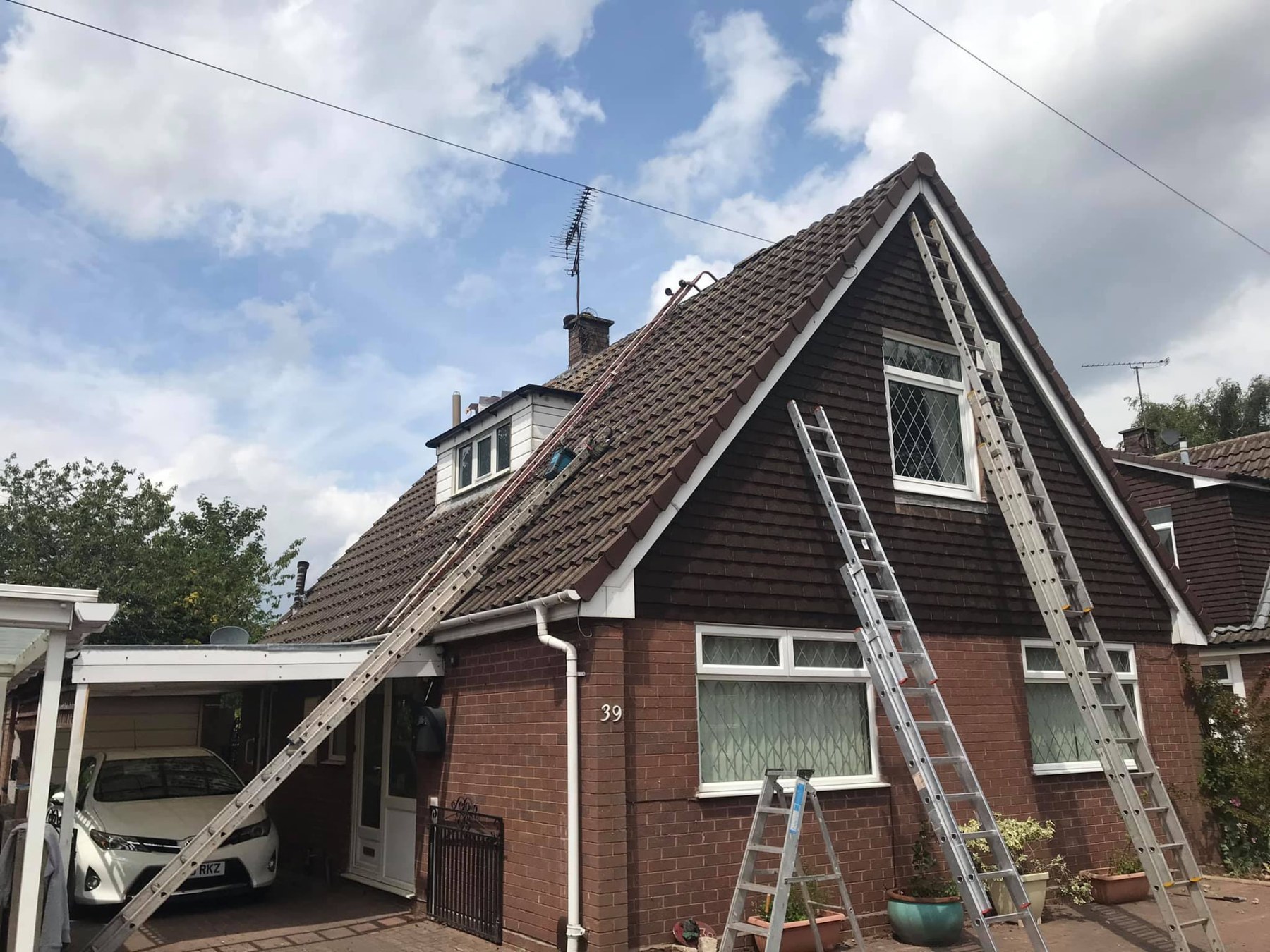
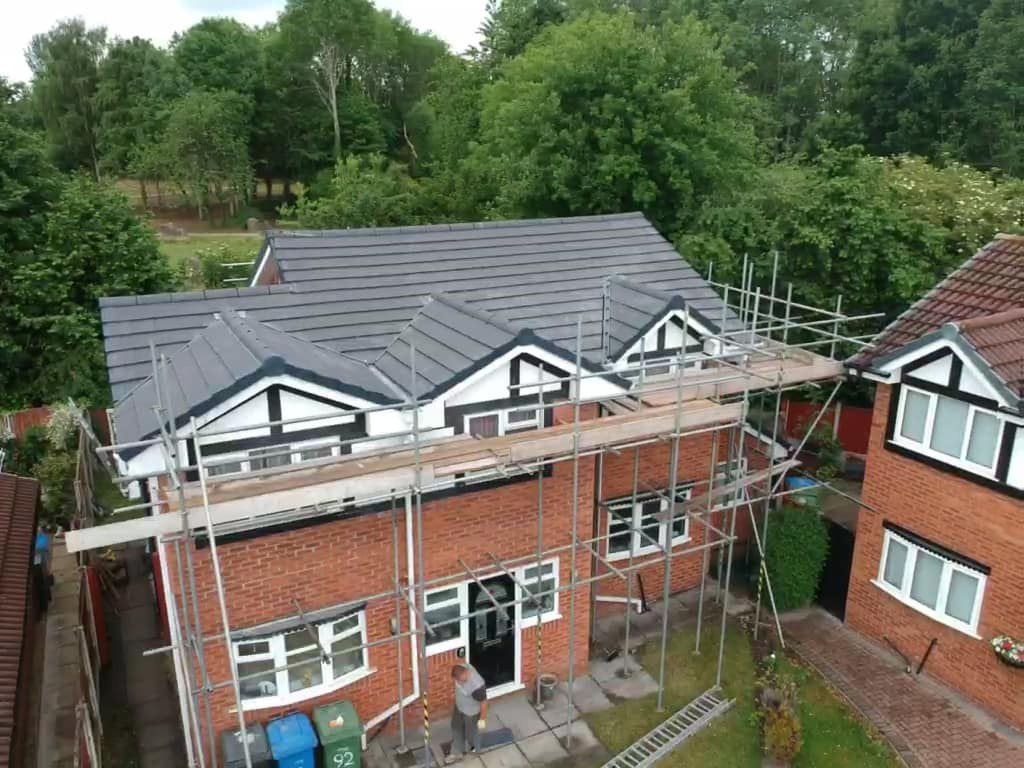
Detached Berkshire home after a complete new tiled roof by H Lee & Son Roofing Services
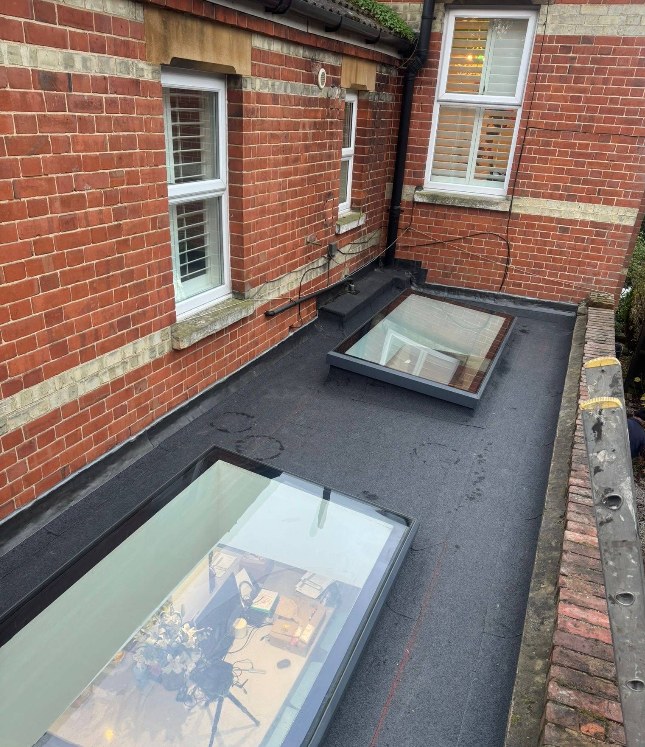
New flat roof with two large rooflights fitted to a Surrey extension
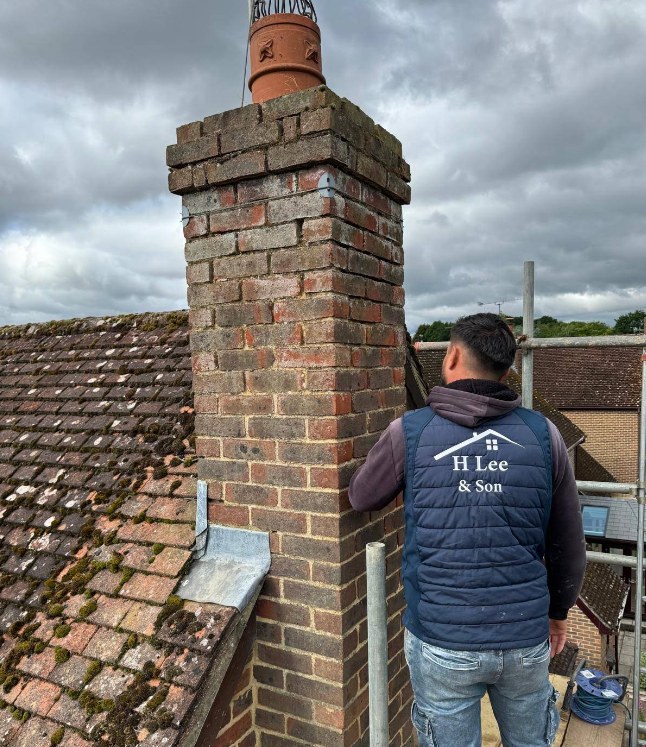
Chimney stack rebuilt and re-leaded during chimney repairs in Berkshire
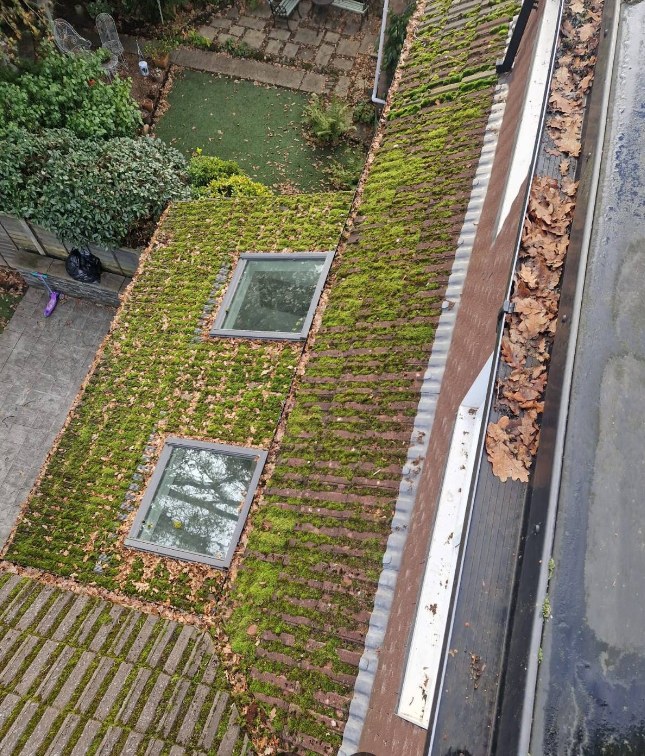
Moss-covered tiled roof and blocked guttering before roof and gutter cleaning
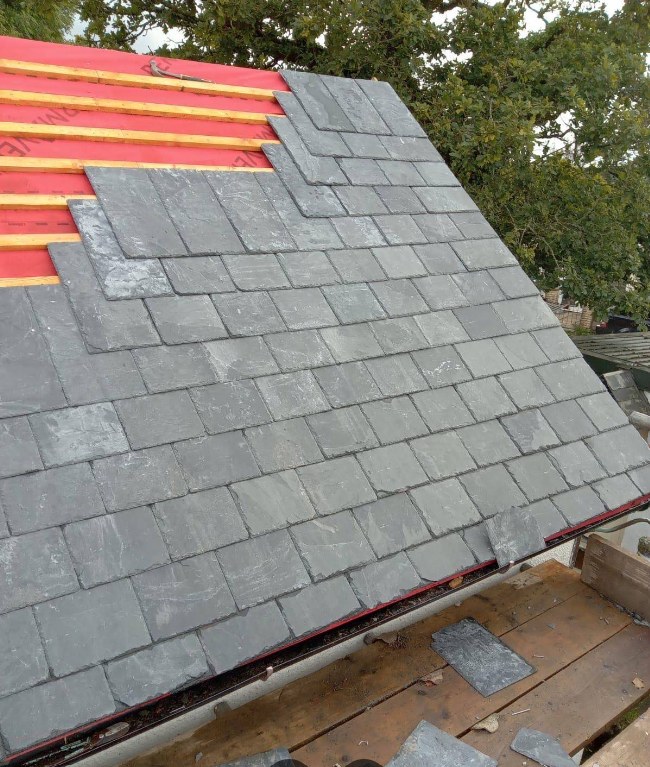
Grey slate tiles being laid over breathable membrane during a re-roof in Sandhurst
Call nowFree quote