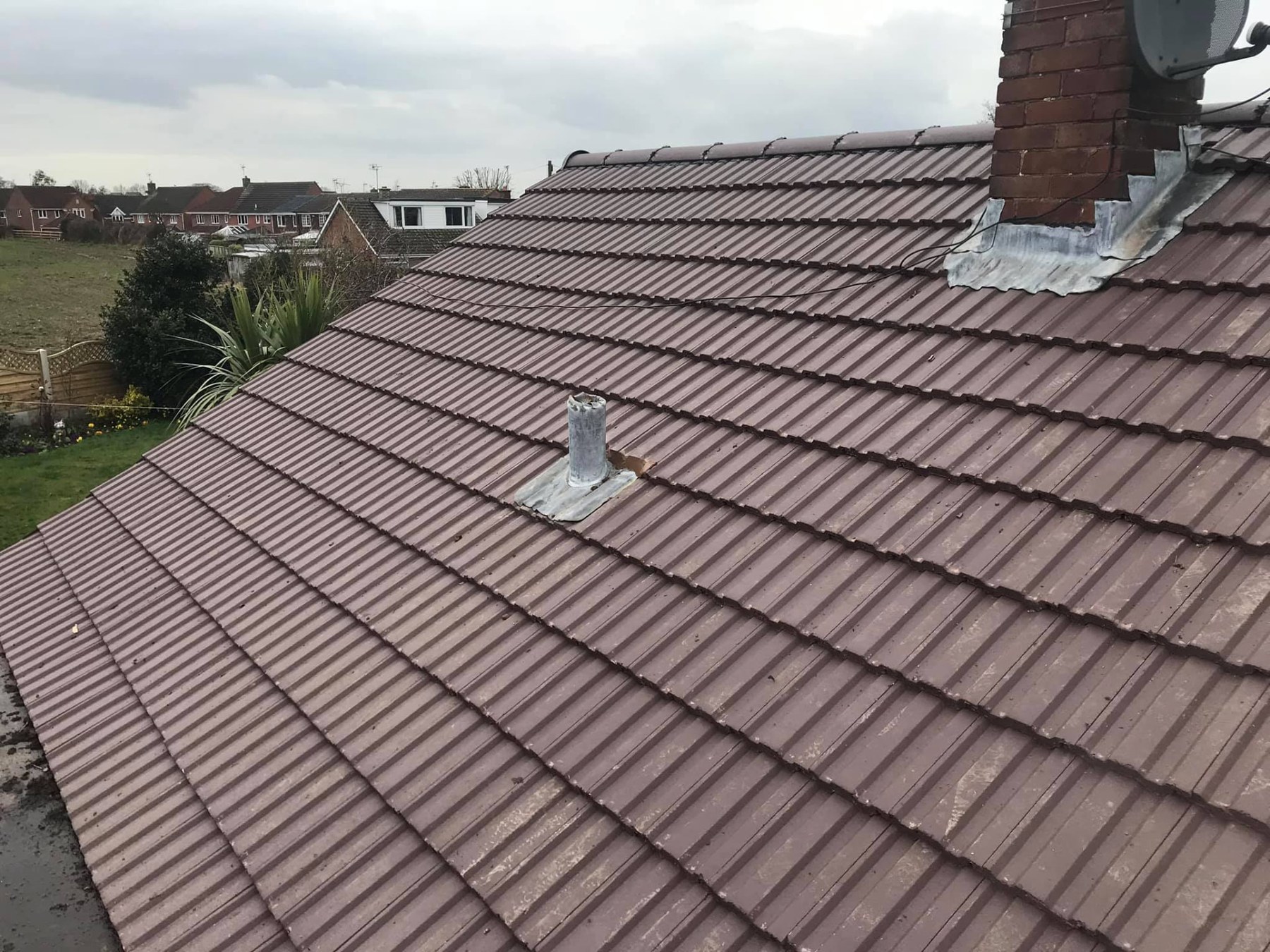
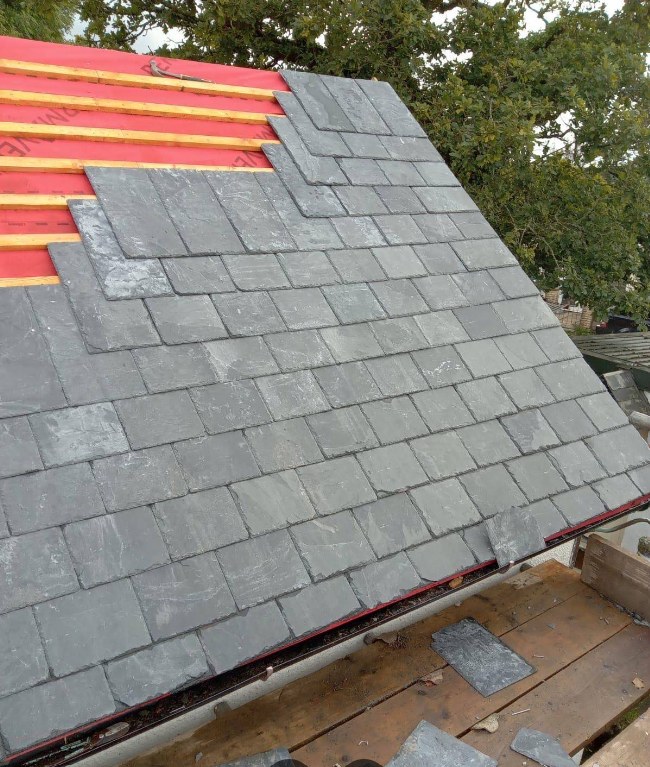
Owlsmoor sits immediately south of our Sandhurst yard, and it is one of the areas we attend most often simply because of how close it is. The estate grew largely through the 1970s and 80s, and that single building era gives the area a fairly consistent roofing profile: shallow-pitch roofs finished in concrete interlocking tiles across street after street, many of them now reaching the same point in their working life within a few years of each other.
What sets Owlsmoor apart from many nearby estates is the tree cover. The area backs directly onto Broadmoor Woods and sits close to Wildmoor Heath, and the conifer and pine planting that lines many of its roads and back gardens puts a heavy, constant layer of needles, cones and moss spores onto roofs that would otherwise be straightforward to maintain. Pine debris behaves differently to broadleaf leaf fall, it sheds gradually all year rather than in one autumn drop, and it packs into gutters and valleys in a way that is easy to underestimate.
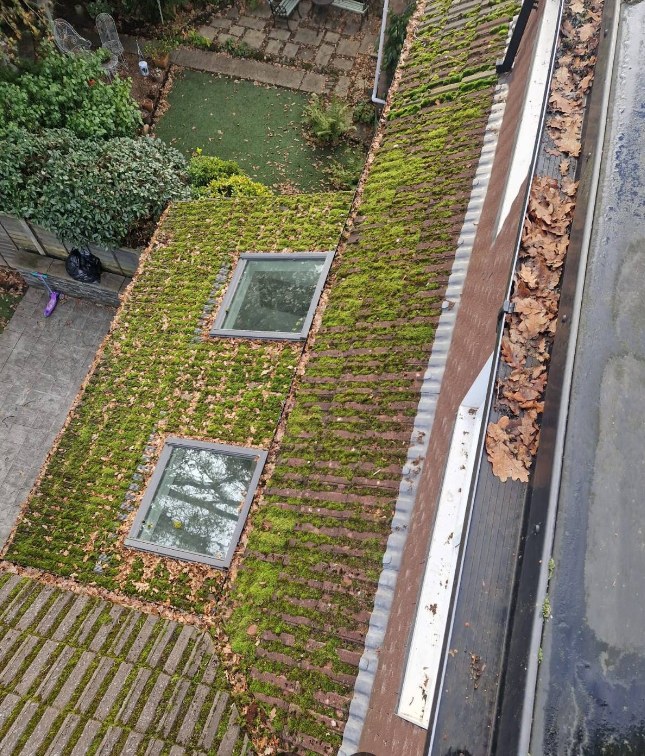
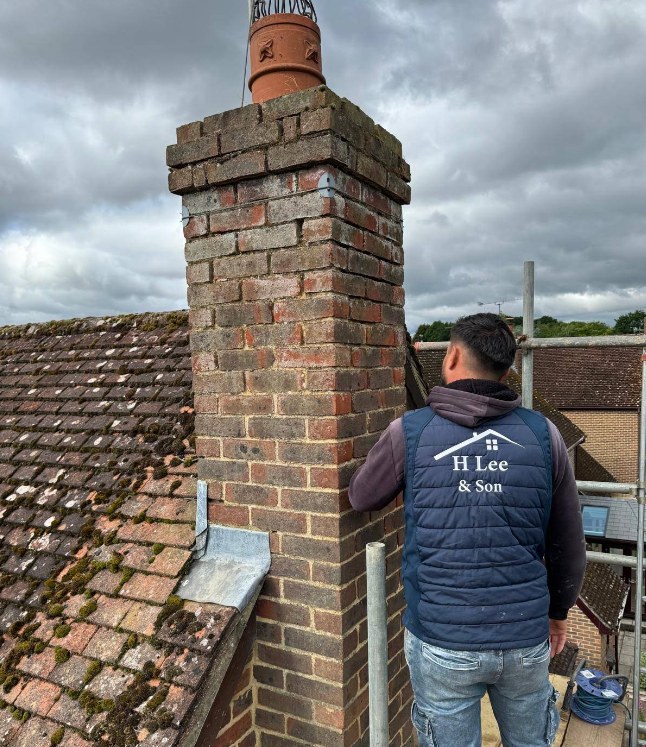
That constant shade and organic debris means moss growth on Owlsmoor's roofs tends to be heavier and more persistent than on more open estates nearby. Concrete tiles have a slightly porous surface that moss and algae take hold of readily, and once established on a shaded, north-facing pitch under mature pines, growth can spread across a whole roof slope within a couple of seasons if left unchecked. We treat a steady stream of Owlsmoor roofs for exactly this, using biocide moss treatment to kill growth back before it lifts tiles or blocks water paths.
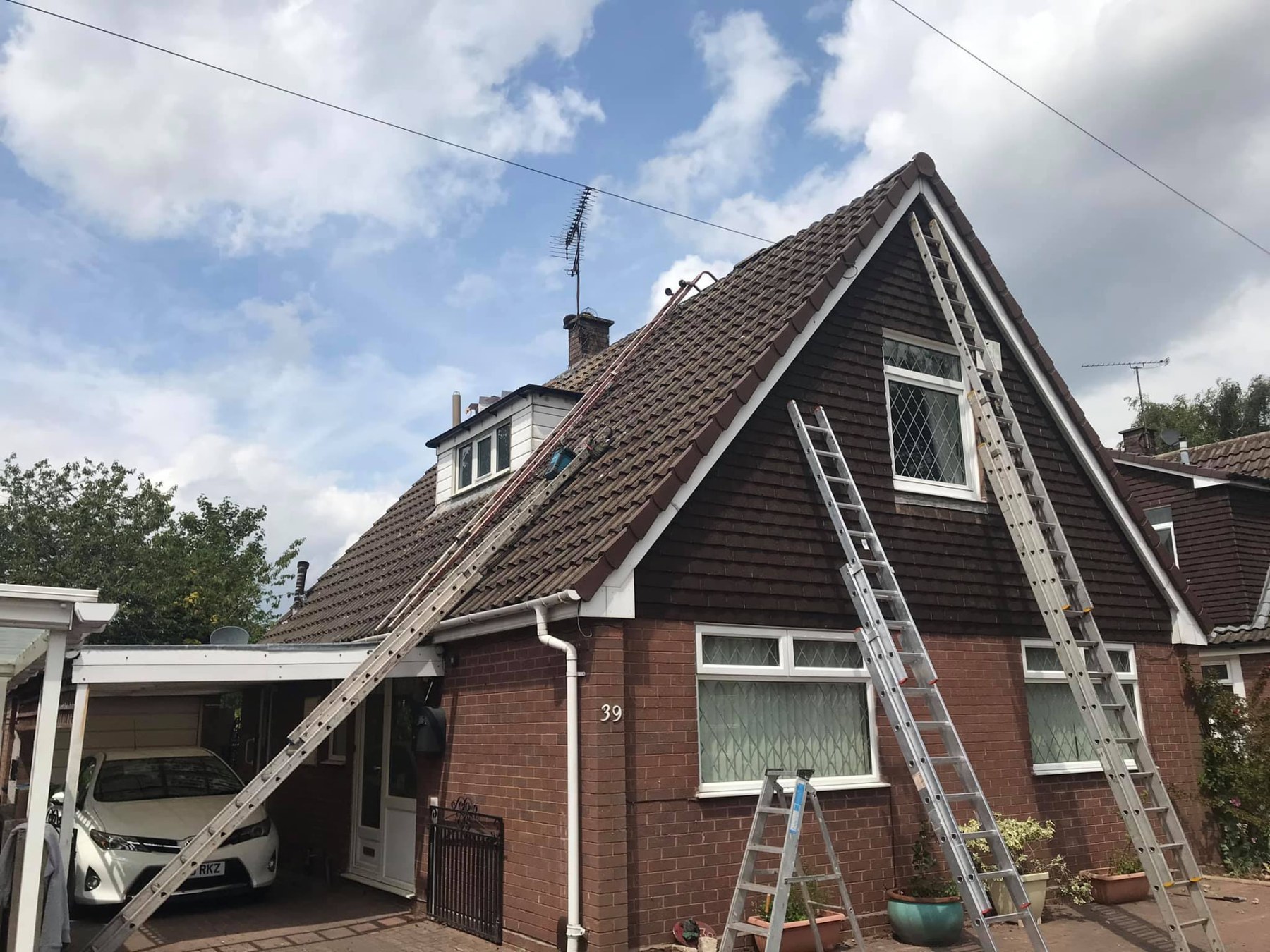
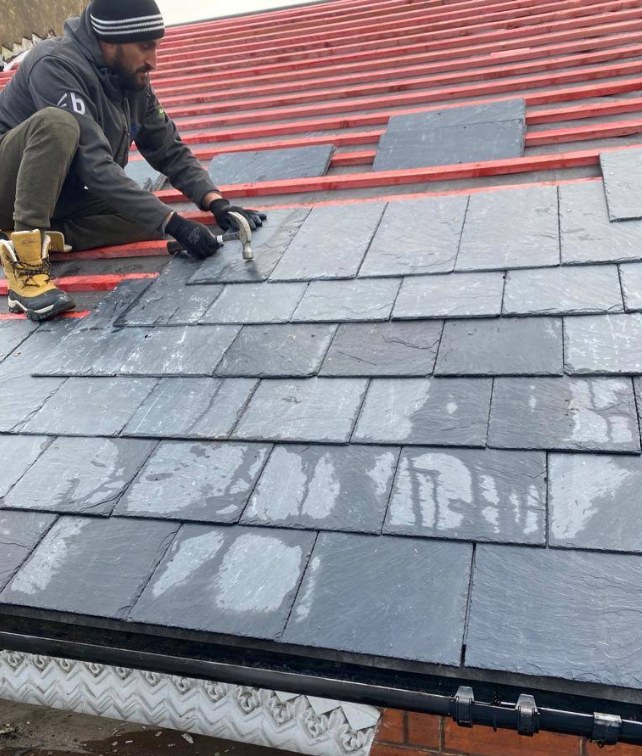
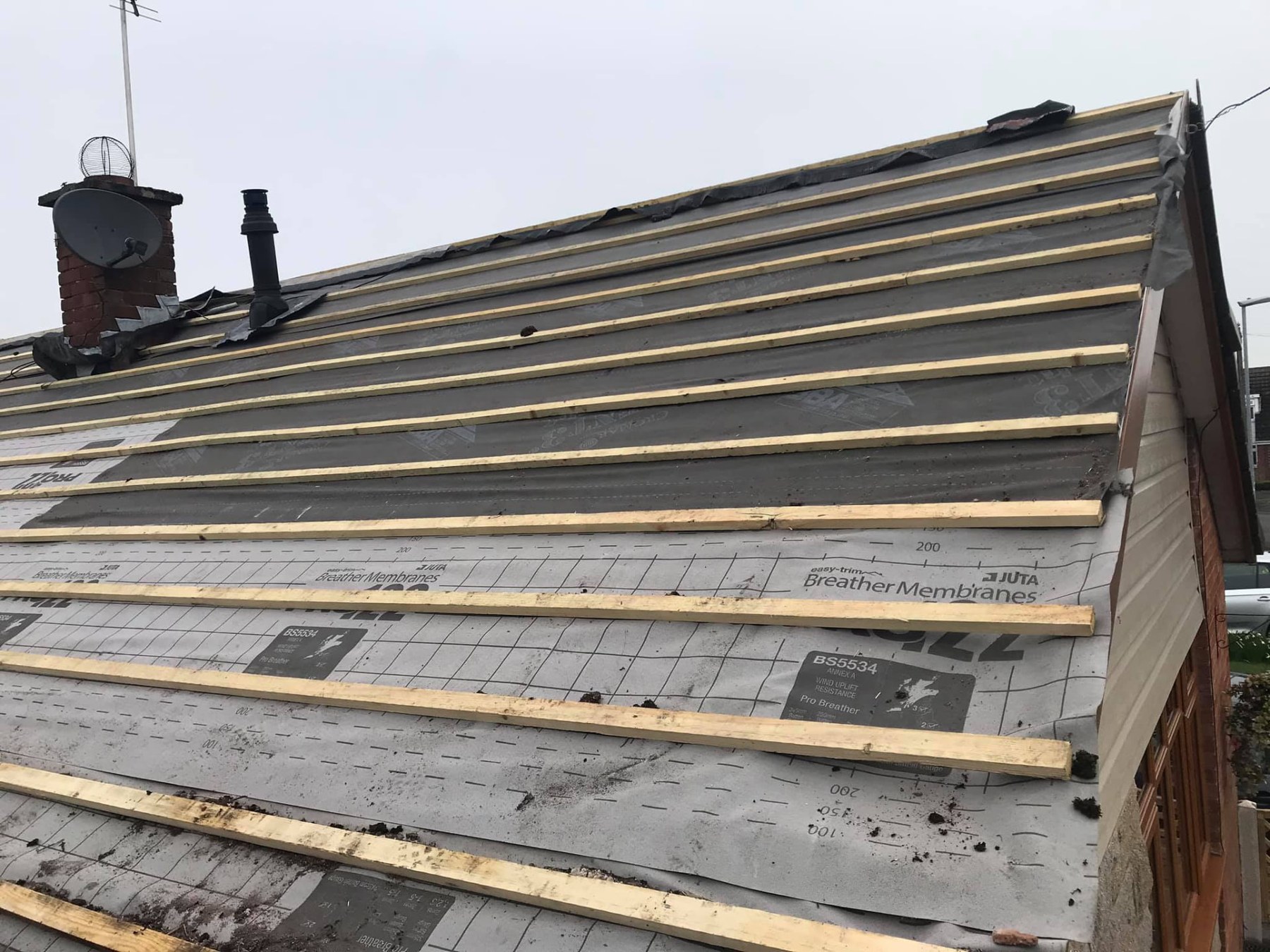
Beyond moss and debris, the estate's uniform building era means the interlocking tiles fitted originally are now, in many cases, simply old. Nail fatigue and slipped tiles are common on roofs that have never been touched since the house was built, and where the felt underlay beneath is the original bituminous type rather than a modern breathable membrane, it is often the underlay rather than the tiles themselves that has failed first.
Gutters and roofline take a particular battering here too. Pine needles form a dense mat that ordinary leaf guards do not always cope with, and where gutters overflow repeatedly the fascia and soffit boards behind them can rot from the back, invisible from ground level until the board itself starts to sag. We see this pattern often enough in Owlsmoor that we recommend more frequent gutter clearance here than we would for a similar estate with less tree cover.
Because our yard is only a short drive away in Sandhurst, we can respond quickly to Owlsmoor call-outs, whether that is an emergency after a branch comes down in a storm or a routine survey ahead of a re-roof. The estate's consistent housing stock also means we can often anticipate what a survey will find before we arrive, which keeps quotations accurate and the process quick for homeowners.