Bracknell is one of the towns we cover most often, and it is a town of several distinct roofing eras rather than one. We work across Great Hollands, Easthampstead, Birch Hill, Harmans Water, Priestwood, Wildridings and the newer neighbourhoods around Jennett's Park and Warfield, and each of those areas throws up a different kind of job. A crew that only knows one type of Bracknell roof is not much use to the town as a whole, which is why we treat the postwar estates and the new-build streets as separate specialisms rather than one generic service.
Sandhurst to Bracknell is a short run down the A322 and B3430, typically well under twenty minutes in normal traffic, which means same-day attendance is usually possible when a roof needs urgent attention in RG12 or RG42. That matters on the town's older estates in particular, where a slipped tile on a low-pitch roof can let water in faster than the equivalent problem on a steeper Victorian roof, simply because there is less fall to carry the water away before it finds a gap.
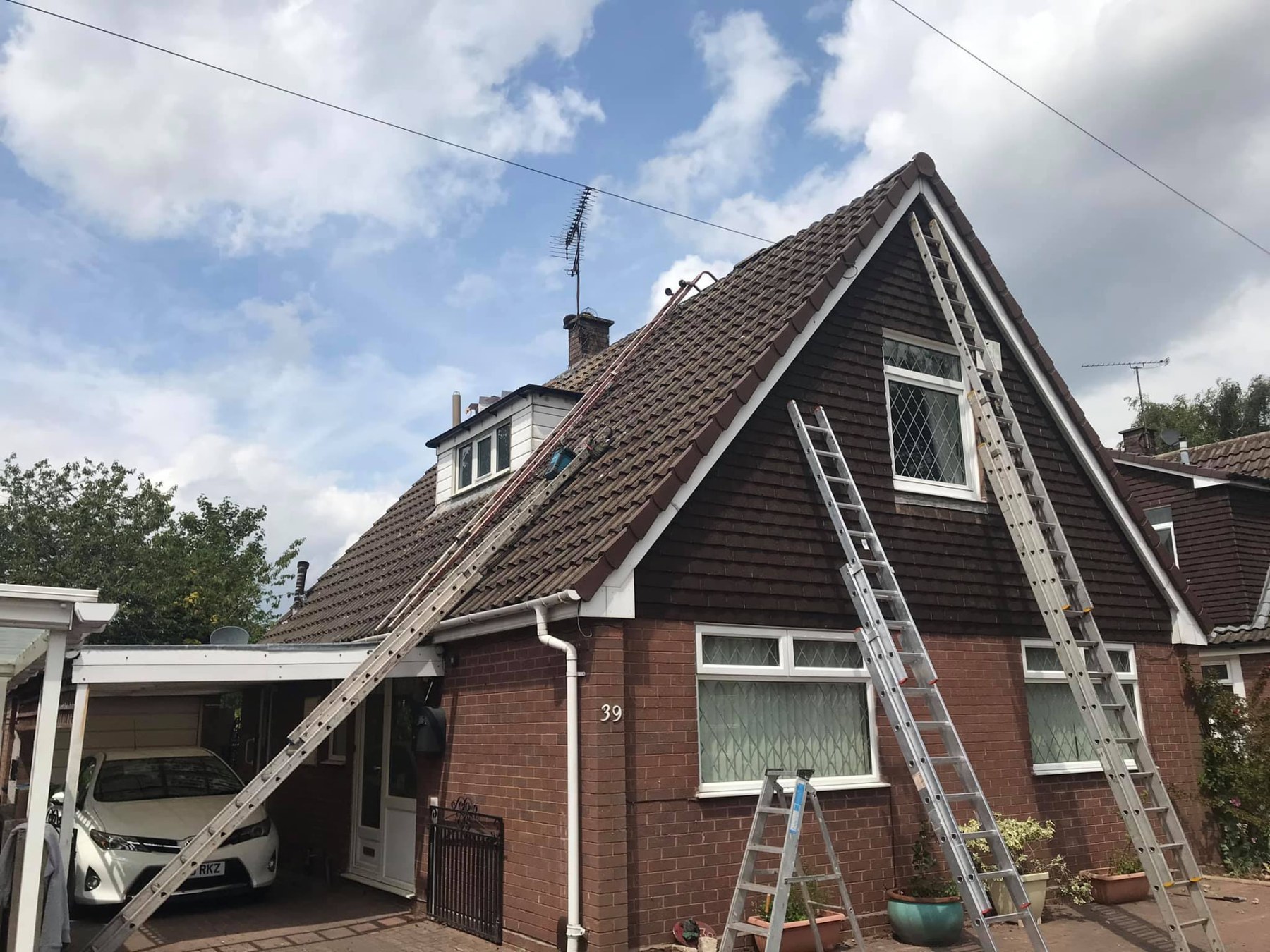
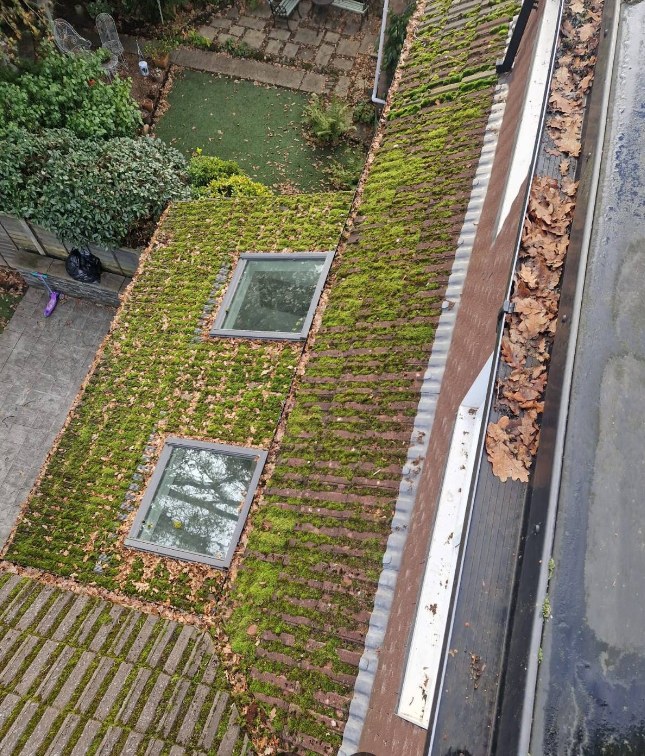
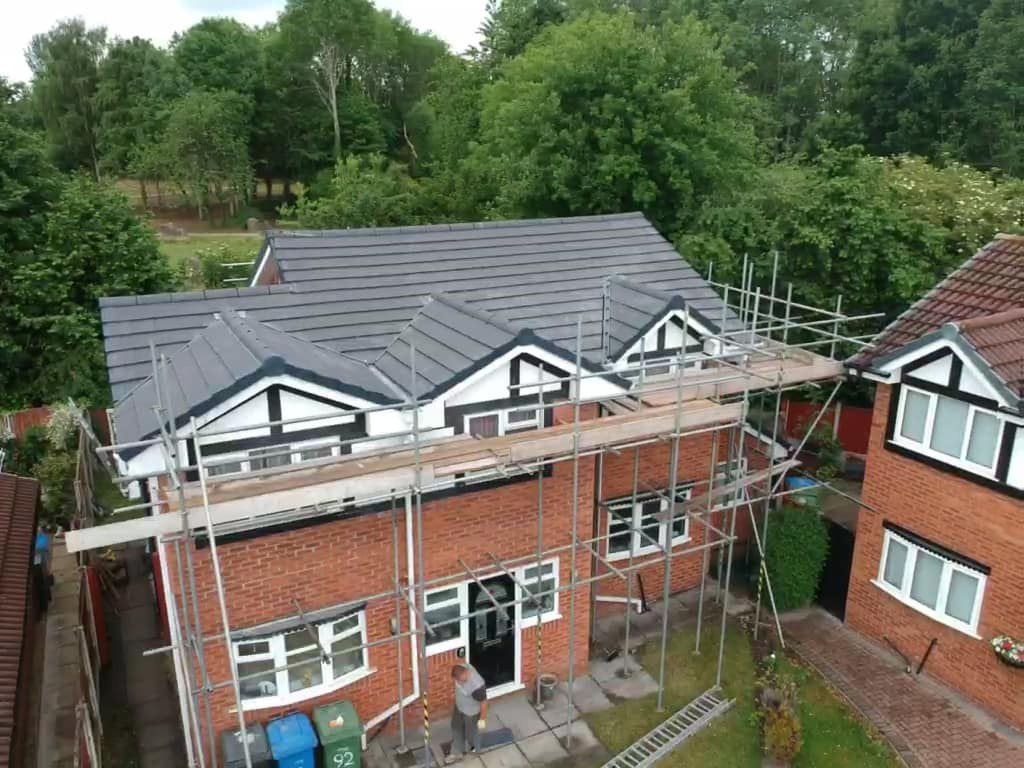
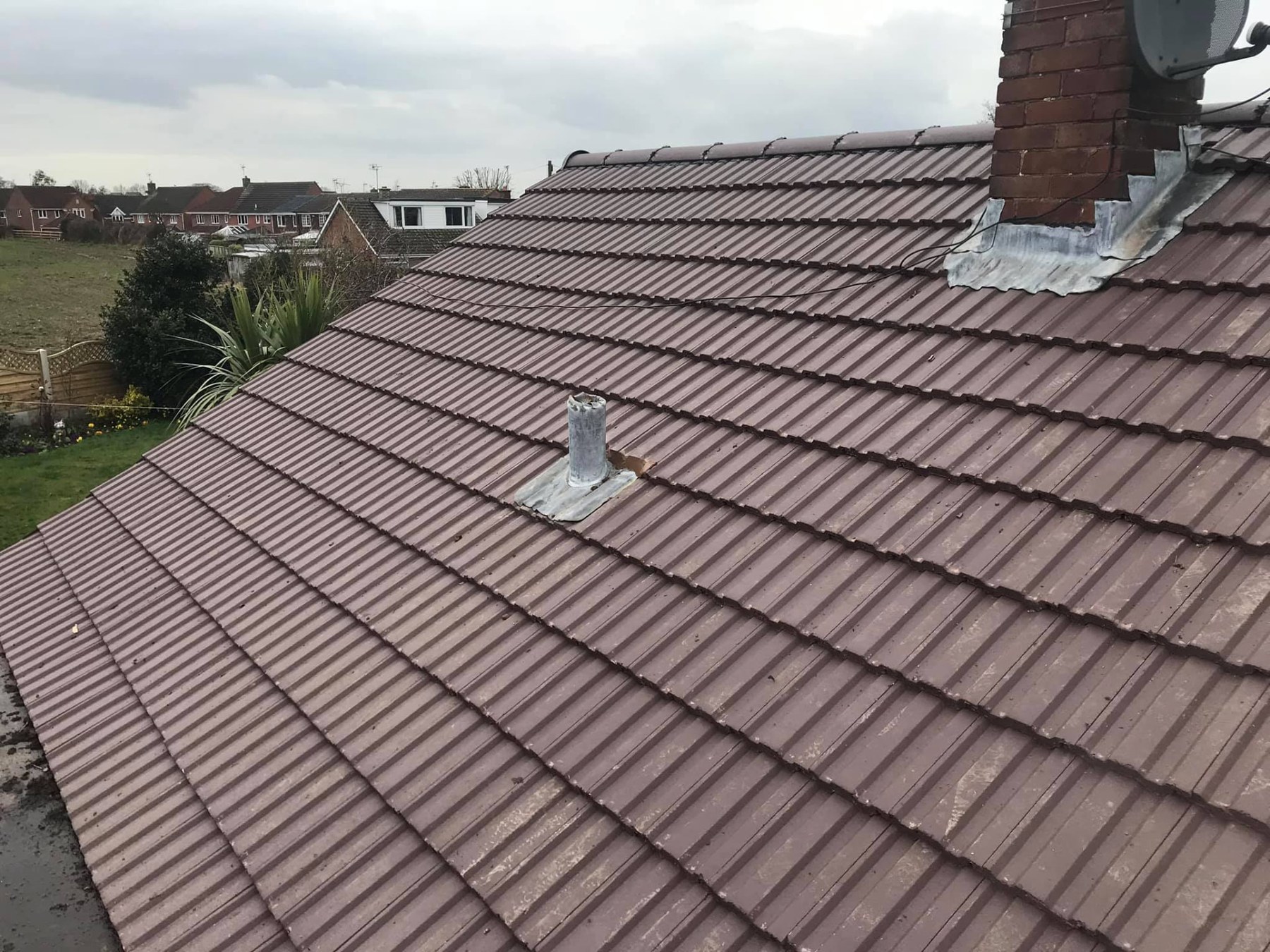
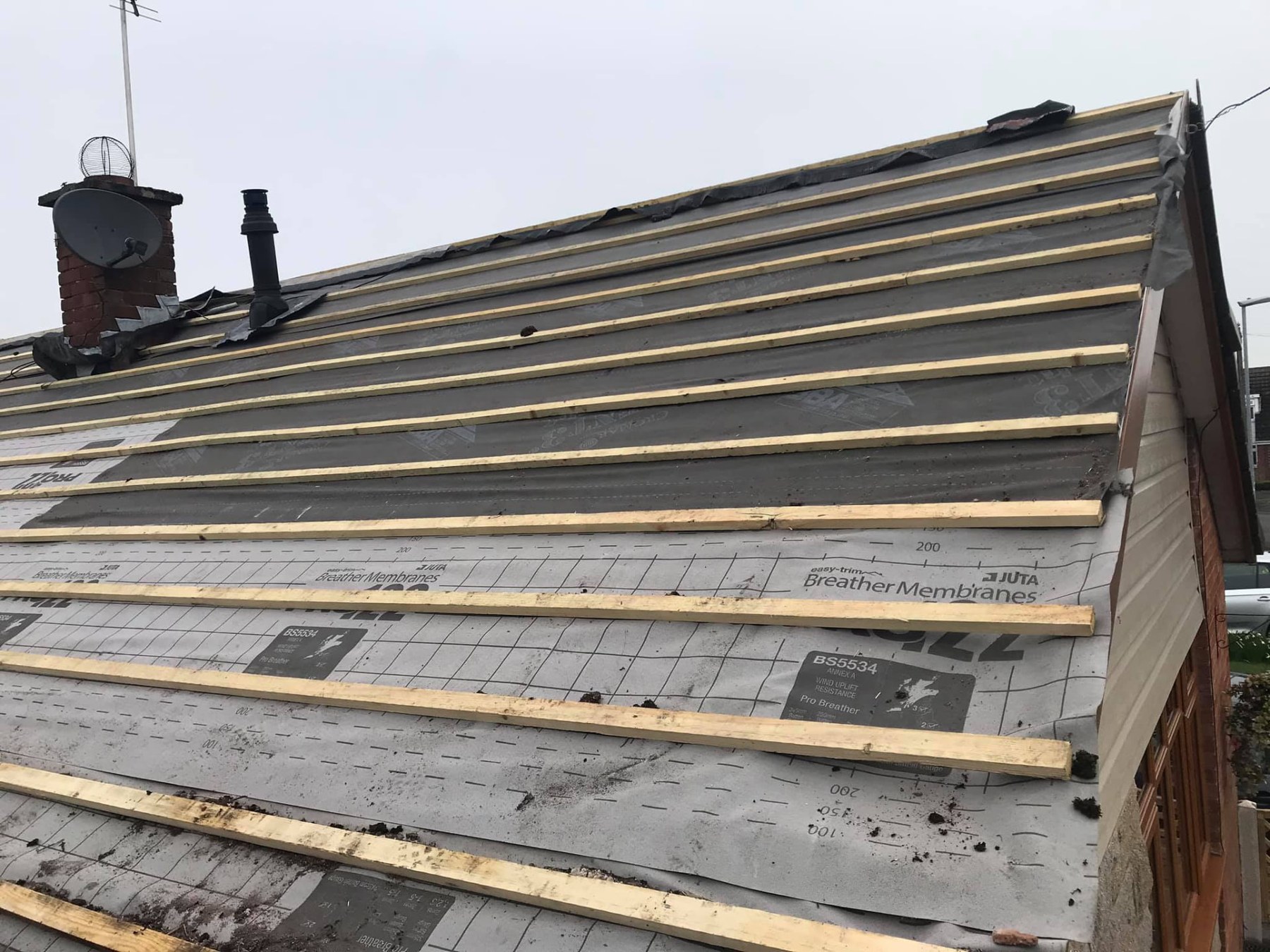
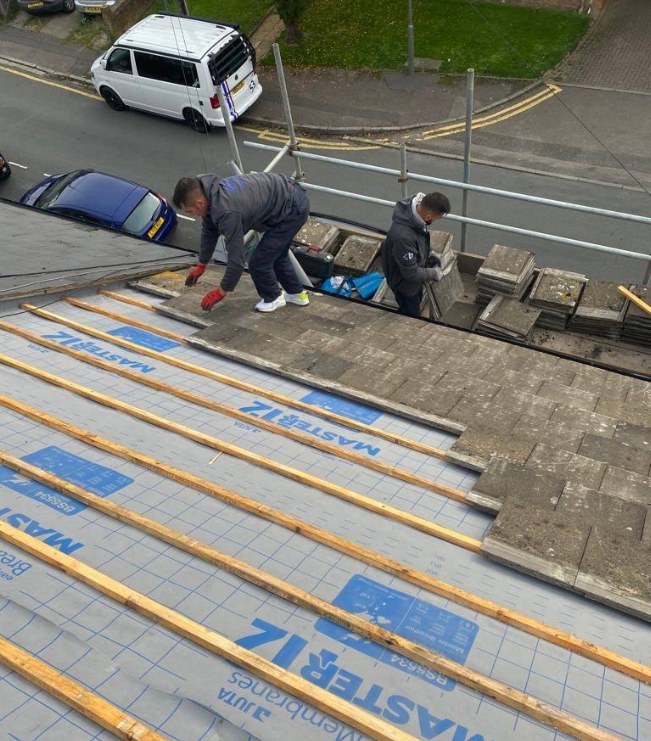
The bulk of our repeat work in Bracknell is on the 1950s to 1970s new town housing stock: Great Hollands, Easthampstead and Harmans Water in particular were built quickly to house families moving out of London, with low-pitch roofs, concrete interlocking tiles, flat-roofed garages and integral porches, and dormer conversions added over the decades since. Birch Hill has a similar mix with more variation in roof shape. That generation of concrete tile is now reaching, or has already reached, the end of its practical working life across whole streets at once, which is why we are increasingly quoting full re-roofs rather than individual tile repairs in these areas.
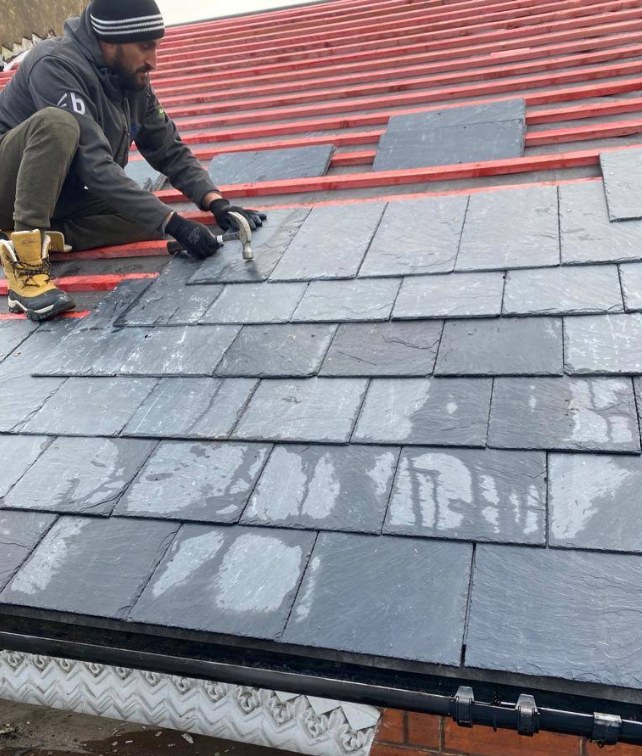
Alongside that older stock, Bracknell has grown fast in the last fifteen years, with Jennett's Park and the ongoing development around Warfield adding thousands of new homes with modern interlocking concrete or clay tiles, factory-cut roof trusses and, on many of the larger houses, dormer windows and hip ends as standard. These roofs are generally sound, but new-build snagging, poorly bedded ridge tiles, and flashing that was rushed at handover are common enough that we get called out to relatively young roofs in these estates too.
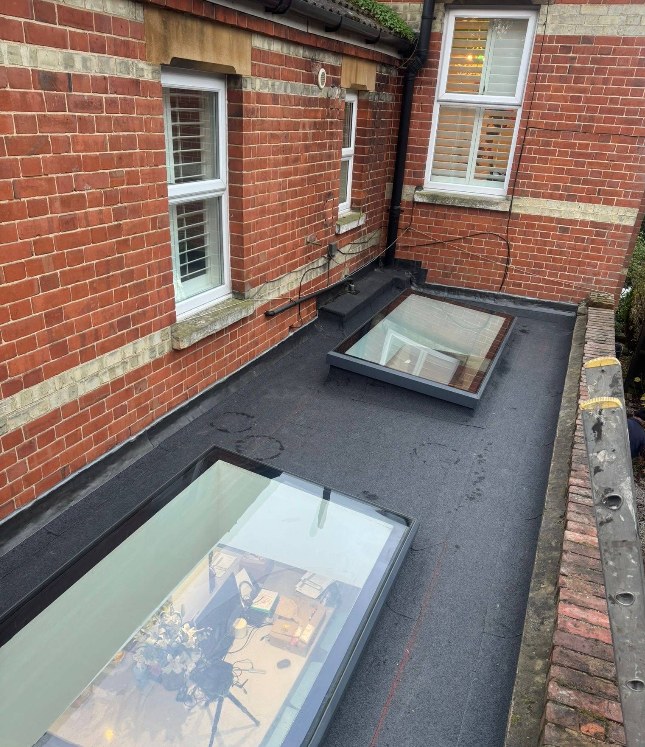
Flat roofs feature heavily across the town centre's mixed retail and residential blocks and on the garages and porch canopies of the older estates. Many of these were felted decades ago and are now blistered, ponding or past their working life; we increasingly replace them with EPDM rubber or GRP fibreglass, both of which outperform old-style felt and cope far better with the low falls typical of Bracknell's estate garages and dormer cheeks.
The volume of low-pitch roofing across Bracknell also means gutter and roofline work is a constant. Flat-roofed garages, box gutters between terraces on Harmans Water and Birch Hill, and the long fascia runs on Jennett's Park's larger houses all need regular attention, and blocked or sagging guttering on a low-pitch roof causes problems far faster than on a steep Victorian one.